How Web Development Is Changing in 2026 for Business
👁 37 Views
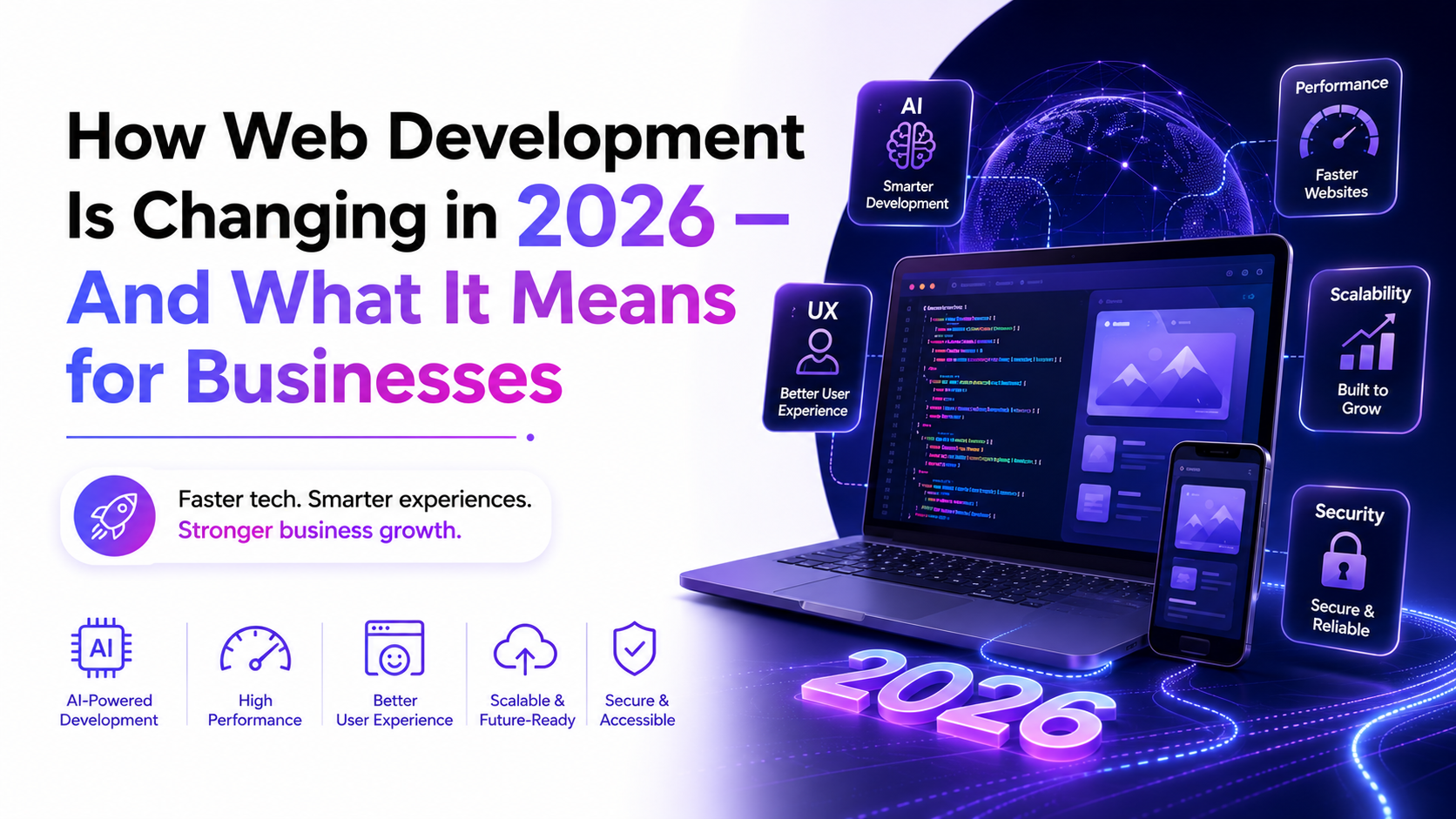
Web development is changing faster than ever. AI is helping developers write and test code, modern frameworks are making complex applications easier to build, and new technologies are improving website speed and user experience.
But the biggest change isn't that AI is replacing developers. It's changing how websites are designed, developed, and maintained.
In 2026, successful web development is becoming less about simply writing code and more about creating digital experiences that are fast, secure, scalable, accessible, and useful.
AI Is Becoming Part of Development
AI is now becoming a practical part of everyday development. Developers can use AI tools to generate code, identify errors, create tests, understand unfamiliar code, and speed up repetitive tasks.
However, AI still needs human direction. Developers must understand the business requirement, choose the right technology, review the output, and make sure the final product is secure and reliable.
For businesses, this can mean faster development, quicker testing, and more efficient digital projects.
Modern Frameworks Are Making Websites More Flexible
Frameworks such as Next.js are helping developers build modern websites and applications with features such as server-side rendering, static generation, and performance optimisation.
Technologies such as TypeScript can also make larger projects easier to maintain.
But businesses don't always need the latest technology. A simple company website and a large e-commerce platform have very different requirements.
The right technology is the one that solves the business problem—not simply the newest one.
Website Performance Is Becoming Essential
Users expect websites to load quickly. If a page takes too long, visitors may leave before they even see what a business offers.
Modern development therefore focuses heavily on:
- Faster loading
- Image optimisation
- Mobile performance
- Efficient code
- Caching
- Core Web Vitals
- Fast content delivery
For businesses, better performance means a smoother customer experience and fewer opportunities for visitors to leave.
Websites Are Becoming More Modular
Modern websites are increasingly being built with flexible architectures.
One example is headless architecture, where the frontend and backend are separated. This can allow businesses to manage content centrally while delivering it across websites, mobile applications, and other platforms.
However, headless architecture isn't necessary for every project.
The important question is not, "What is the latest architecture?"
It's "What does the business actually need?"
User Experience Is Becoming More Intelligent
A modern website should do more than look attractive. It should help users find information and complete actions easily.
AI and data can make digital experiences more relevant by providing personalised recommendations, content, and interactions.
For example, an e-commerce website can recommend products based on previous activity, while a content platform can suggest relevant articles.
But technology should simplify the user experience—not complicate it.
Security and Accessibility Matter More Than Ever
Modern websites are connected to payments, customer databases, APIs, analytics tools, and other services. This makes security a fundamental part of development.
Accessibility is equally important. Websites should be designed so people with different abilities can navigate and interact with them effectively.
Security and accessibility should be considered from the beginning, not added at the end.
The Developer's Role Is Evolving
The modern developer needs to understand more than code.
They increasingly need to consider:
Business Goals + User Experience + Technology + Data + AI
Understanding why a website is being built helps developers make better technical decisions.
The future of web development isn't simply about learning another programming language or framework.
It's about solving problems with technology.
What Does This Mean for Businesses?
Businesses don't need to follow every technology trend.
Instead, they should ask:
- Is our website fast enough?
- Does it work well on mobile?
- Is it easy to use?
- Can it scale with the business?
- Is customer data secure?
- Can our team manage the website easily?
- Are we using AI to solve a real problem?
These questions are more important than asking which technology is trending in 2026.
The Future Isn't Just About Building Websites
The future of web development is about combining human thinking with better technology.
AI can help developers work faster. Modern frameworks can create flexible systems. Performance technologies can make websites faster. Data can help businesses understand their customers.
But the goal remains simple:
Create digital experiences that solve real problems for real people.
At VAI Space, we believe web development is more than building a website. It's about bringing together design, technology, performance, and business goals to create a digital presence with purpose.
Because a website shouldn't simply exist. It should have a purpose.